Pillar guide · Ethiopian Paraiba
Ethiopian Paraiba Tourmaline
“Ethiopian Paraiba” is a trade expression for copper-bearing tourmaline reported from Ethiopia. Whether a specific stone can be called Paraíba tourmaline depends on laboratory analysis, not on where it was bought or how blue it looks. This guide explains the terminology, the science and the buying considerations in one place.
- By
- Paraiba Ethiopia Editorial Team
- Reviewed by
- Review pending
- Updated
What is Ethiopian Paraiba tourmaline?
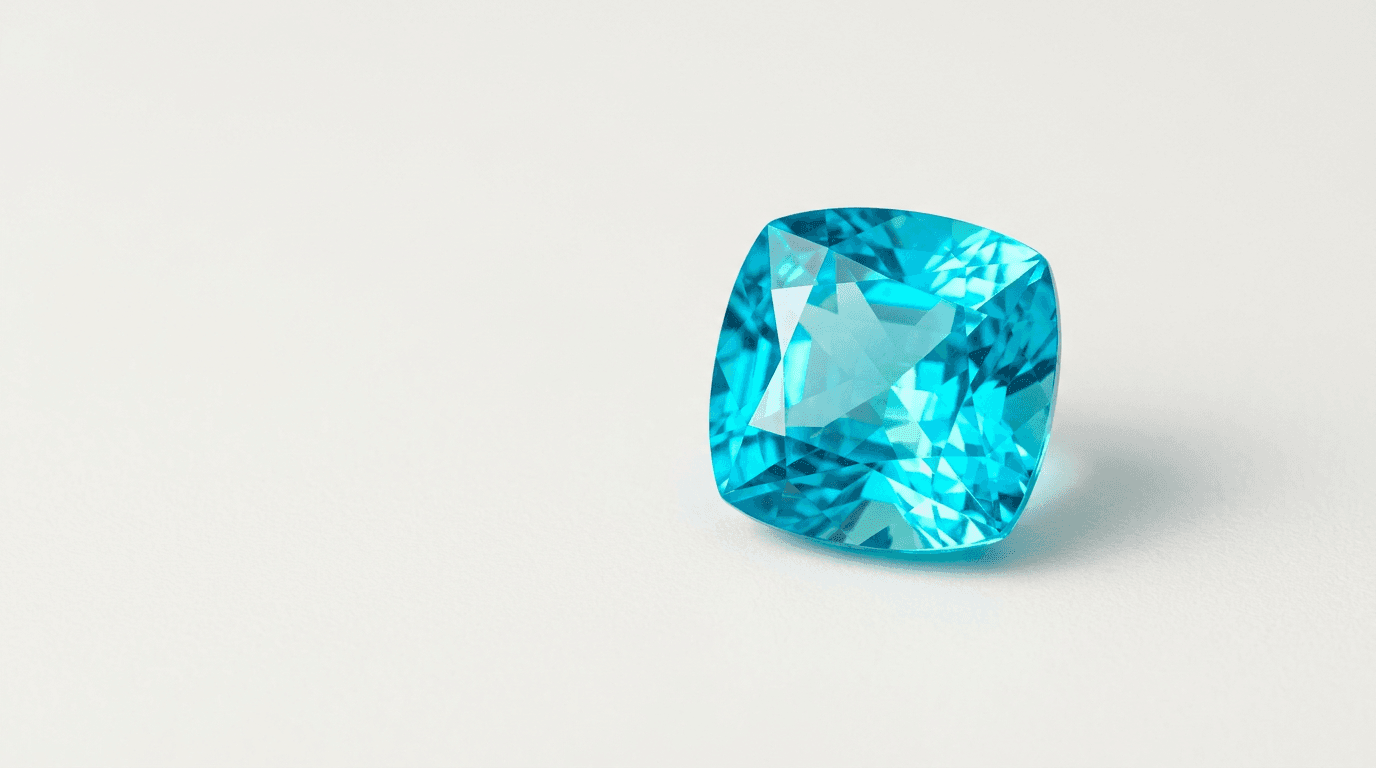
It is tourmaline from Ethiopia that contains copper and shows a blue to green colour caused largely by that copper. In laboratory terminology, “Paraíba” describes a colour-and-chemistry variety of tourmaline, not a single mine. A stone qualifies only when analysis confirms copper (and usually manganese) as the colour-causing elements.
The name comes from the Brazilian state of Paraíba, where intensely coloured copper-bearing tourmaline entered the gem market around 1989. Similar material was later found in Rio Grande do Norte (Brazil), Nigeria and Mozambique. Because the gems from these localities can look alike, laboratories adopted a variety definition: “Paraíba tourmaline” refers to blue, greenish blue, bluish green or green elbaite-type tourmaline coloured by copper, regardless of where it was mined.
Under that definition, a stone from Ethiopia could carry the Paraíba variety name if it meets the same criteria. Many laboratories add that the name says nothing about geographic origin, and that origin — if it can be determined at all — is stated separately on the report.
Is Ethiopian tourmaline copper-bearing?
Some tourmaline offered as Ethiopian is reported to be copper-bearing, but this cannot be assumed. Only chemical analysis — such as EDXRF or LA-ICP-MS — can confirm the presence of copper in a specific stone.
Tourmaline is a large mineral supergroup and ordinary blue or green tourmaline is coloured mainly by iron. Iron-coloured indicolite and verdelite can look superficially similar to copper-bearing material, especially in photographs. For that reason, the phrase “Ethiopian Paraiba” in a listing should be read as a claim to be verified, not as a description.
- Ask whether copper was detected, by which method, and by which laboratory.
- Check whether the report uses the variety name “Paraíba” or a neutral term such as “copper-bearing tourmaline”.
- Confirm whether an origin opinion was given, or whether the origin is only the seller’s statement.
Which colours does Ethiopian copper-bearing tourmaline show?
The colours discussed in the trade range from neon blue through greenish blue and bluish green to vivid and light mint green. Saturation and brightness matter as much as hue for both nomenclature and value.
In copper-bearing tourmaline, copper (Cu²⁺) is primarily responsible for blue to green colour, while manganese (Mn³⁺) can add a violet component and iron can darken or shift the colour toward green. The balance between these elements, plus any heat treatment, determines where a stone sits on the blue–green continuum.
See the colour guide for a detailed breakdown of each colour category and how it is described on laboratory reports.
How is Ethiopian Paraiba identified?
Identification is a sequence: standard gemological tests confirm the stone is tourmaline, spectroscopy and chemistry confirm copper as a chromophore, and microscopy and spectroscopy look for treatments. Origin, if offered, is a separate opinion based on reference data.
- Step 1
Confirm species
Refractive index, birefringence, specific gravity and Raman spectroscopy establish that the stone is tourmaline.
- Step 2
Detect copper
EDXRF or LA-ICP-MS measures copper, manganese, iron and trace elements.
- Step 3
Read the spectrum
UV-Vis-NIR absorption shows the broad Cu²⁺-related bands in the red and near-infrared.
- Step 4
Check for treatment
Microscopy and FTIR look for evidence of heating and clarity enhancement.
- Step 5
Origin opinion
Trace-element patterns are compared against reference samples — not always conclusive.
Is Ethiopian Paraiba treated?
Copper-bearing tourmaline from many sources is routinely heated to reduce violet or purple tones and achieve a purer blue. Fissures may also be clarity-enhanced with oils or resins. Any treatment must be disclosed and should be addressed on a laboratory report.
Heating copper-bearing tourmaline is generally considered stable, but it is often difficult or impossible for laboratories to prove. Many reports therefore state that heating cannot be determined. Clarity enhancement is easier to detect and affects durability and value more directly.
What determines the value of Ethiopian Paraiba?
Value is driven by confirmed copper content and nomenclature, colour saturation and brightness, clarity, size, cutting quality, treatment and the credibility of the laboratory report. Origin can influence price, but only when it is stated by a recognised laboratory.
Paraiba Ethiopia does not publish price-per-carat figures because reliable, verified transaction data for Ethiopian material is not available. The price guide explains each value factor in detail and why unsupported price claims should be treated with caution.
How does Ethiopia compare with Brazil and Mozambique?
Brazil is the historic origin of the name and its fine material commands the highest premiums. Mozambique supplies much of today’s copper-bearing tourmaline in larger sizes. Ethiopian material is comparatively recent and less documented, so verification matters even more.
| Attribute | Ethiopia | Mozambique | Brazil |
|---|---|---|---|
| Geographic origin | East Africa. Specific localities to be documented with verified sources. | East Africa; deposits most often cited in Nampula Province (Alto Ligonha pegmatite district). | North-eastern Brazil; the original Paraíba deposits and later finds in Rio Grande do Norte. |
| Typical colour range | Blue, green and blue-green tourmaline reported in the trade; systematic colour documentation in progress. | Blue, greenish blue, green, violet to purple; frequently heated to modify colour. | Neon blue, greenish blue, green and violet; the reference point for “neon” saturation. |
| Copper-bearing material | Must be confirmed stone by stone through chemical analysis. Colour alone is not evidence. | Copper-bearing material documented in published literature. | Copper-bearing material documented since the original discovery. |
| Market history | Comparatively recent and less documented; this site aims to build a verified record. | Entered the market in the 2000s and now supplies much of the Cu-bearing tourmaline trade. | Introduced to the international market around 1989; the origin of the trade name. |
| Rarity | Not yet quantified. Production volumes are not reliably published. | Rare in fine qualities; larger clean stones occur more often than from Brazil. | Very limited historic production; fine large stones are exceptionally rare. |
| Origin determination | Depends on each laboratory’s reference collection for Ethiopian material, which may be limited. | Laboratories may offer an origin opinion based on trace-element chemistry and reference data. | Laboratories may offer an origin opinion; Brazilian origin often carries a market premium. |
Frequently asked questions
Is “Ethiopian Paraiba” an official gemstone name?
No. It is a trade expression. Laboratories may use the variety name “Paraíba tourmaline” for qualifying copper-bearing tourmaline and state origin separately, if they can determine it.
Can a blue tourmaline from Ethiopia be called Paraíba without testing?
It should not be. Ordinary blue tourmaline coloured by iron can look similar. Only chemical analysis can confirm copper as the colouring element.
Do laboratories issue Ethiopian origin reports for copper-bearing tourmaline?
Origin opinions depend on each laboratory’s reference data. For less-documented sources an origin may not be determinable, and a report may state only that the stone is copper-bearing tourmaline.
Is Ethiopian Paraiba usually heated?
Heating is common for copper-bearing tourmaline in general. Because it is often undetectable, many reports state that heating cannot be determined. Clarity enhancement should always be disclosed.
References
- LMHC information sheet on Paraíba tourmaline nomenclature. Laboratory Manual Harmonisation Committee (LMHC).Citation to be verifiedInsert the current information sheet number, revision date and URL.
- GIA reference on copper-bearing (Paraíba-type) tourmaline. Gemological Institute of America (GIA).Citation to be verifiedInsert a specific GIA article or Gems & Gemology paper with authors and year.
- Documented study of tourmaline from Ethiopia. Peer-reviewed journal or recognised laboratory publication.Citation to be verifiedRequired before any Ethiopian locality, discovery date or chemistry is stated as fact.
- Peer-reviewed study of copper-bearing tourmaline from Mozambique. Gems & Gemology (GIA).Citation to be verifiedInsert full citation of the selected Mozambique study.
- Laboratory guidance on treatment disclosure for tourmaline (heating and clarity enhancement). Recognised gemological laboratory.Citation to be verified
Author
Paraiba Ethiopia Editorial Team
The editorial team researches and writes Paraiba Ethiopia’s educational content on copper-bearing tourmaline, prioritising laboratory nomenclature and published gemological literature over trade claims.
Technical reviewer (assignment pending)
Independent gemological reviewer
Placeholder. A qualified gemologist will be named here once technical review of this page is complete. Until then, treat technical statements as editorially prepared but not yet independently reviewed.
First published 1 October 2026. Read our editorial policy
Continue reading
- TerminologyWhat Is Paraíba Tourmaline?The definition of Paraíba tourmaline: a copper-bearing variety of elbaite-type tourmaline named after the Brazilian state where it was first found.
- GemologyHow Ethiopian Paraiba Tourmaline Is IdentifiedA step-by-step explanation of how gemologists identify copper-bearing tourmaline: standard tests, microscopy, UV-Vis-NIR spectroscopy, EDXRF and LA-ICP-MS chemistry, treatment detection and origin opinions.
- Colour guideEthiopian Paraiba ColoursThe colour range of copper-bearing tourmaline — neon blue, greenish blue, bluish green, vivid green and mint — and the chemistry behind each.
- MarketEthiopian Paraiba Price and Value FactorsThe factors that determine the value of Ethiopian copper-bearing tourmaline: nomenclature, colour, clarity, size, cut, treatment, laboratory reports and origin — and why reliable price figures are scarce.
- Origin comparisonEthiopian vs Mozambique Paraiba TourmalineA careful comparison of copper-bearing tourmaline reported from Ethiopia and documented from Mozambique: geology, colour range, treatment, market history, rarity and origin determination.
- MarketCertification of Ethiopian Paraiba TourmalineHow to read a laboratory report for copper-bearing tourmaline: species, variety, chemistry, treatment and origin sections explained.